
column
What is health food OEM? A complete guide for first-time users to understand costs, systems, and how to choose an OEM in one article.
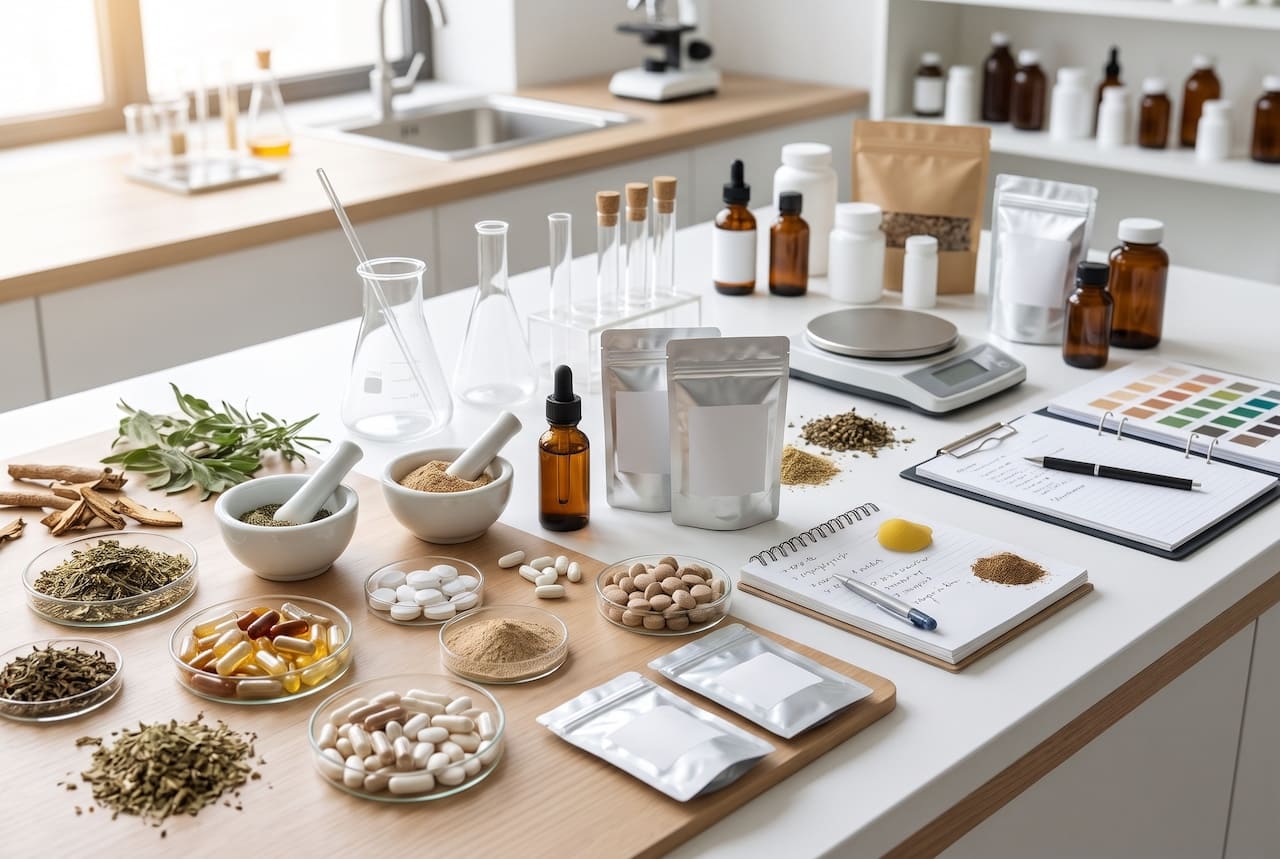
Many people in charge of OEM (Original Equipment Manufacturer) products say things like, "I want to launch my own brand of health food products without owning a factory," or "I don't understand the costs and systems involved in OEM, so I can't explain it to my superiors."
To put it simply, OEM manufacturing of health foods is a way to enter a stable market worth approximately 900 billion yen without investing in a factory.By first establishing the costs, system, and selection criteria, even a novice in charge can significantly reduce the risk of failure.。
This article explains everything from the mechanisms and classifications of health food OEM to the average costs, lot sizes, and delivery times, how to choose a manufacturer, and important points to keep in mind.
If you're someone who doesn't know where to start when making an internal proposal, reading this article from top to bottom will give you a good overall picture.。
- The Complete Picture of Health Food OEM: 6 Key Points for Successful Small-Batch Entry
- The basics of OEM for health foods: The mechanism of contract manufacturing and the difference from ODM.
- Four classifications of health foods: Which system should we use to market our own products?
- Cost, Lot Size, and Delivery Time: Three Key Figures Needed for Internal Approval (Including Explanation of Small Lot Handling)
- How to Choose an OEM Manufacturer: Four Comparison Criteria You Can Explain to Your Boss
- Points to note to prevent failure: Pharmaceutical Affairs Law, system revisions, and quotation verification.
- FAQ: Common questions about health food OEM
- What is the minimum order quantity for OEM manufacturing of health foods and supplements?
- Can I consult with you from the planning stage even if the ingredients and formulation are not yet decided (it's still in the idea stage)?
- Are there any preparations I should make before requesting a quote or making an inquiry about OEM manufacturing?
- Can I also request OEM development of functional foods and nutritional supplements?
- What types of dosage forms (capsules, tablets, drinks, etc.) can be manufactured?
- Summary: Success or failure in health food OEM depends on "preparation." The next step is to clarify the requirements.
The Complete Picture of Health Food OEM: 6 Key Points for Successful Small-Batch Entry
OEM (Original Equipment Manufacturer) for health foods is a system where a company handles planning and sales, while outsourcing manufacturing to a specialized factory.Okay. First, let's summarize the key points of the overall consideration.
| Items to consider | Guidelines and Points | First action |
|---|---|---|
| market size | Approximately 914.7 billion yen (estimated for fiscal year 2025) | Background data for internal proposals |
| Entry methods | We can manufacture in small batches on a contract basis. | Start with test marketing. |
| cost | Minimum order quantity is around 500,000 to 1,000,000 yen. | Budget allocation secured |
| System classification | General Foods / Nutritional Function / Functional Claims / Foods for Specified Health Uses (FOSHU) | Determine the classification of our own products. |
| Selection criteria | Quality, track record, small lot sizes, and support. | Narrow down the comparison axes to four. |
| Main risks | Pharmaceutical and Medical Devices Act, system reforms, and maintenance costs | Prepare a workaround in advance. |
The domestic health food and supplement market is expected to reach 914.7 billion yen in fiscal year 2025. According to a survey by Yano Research Institute, new entrants utilizing OEM (Original Equipment Manufacturer) systems are a trend in the industry.It is attracting attention as a means of entering the market with small lots.。
First, understanding the overall picture of the system and costs is the first step to success. The figure of approximately 900 billion yen will be a powerful tool for explaining "why we should do it now" in your internal proposal.
*Reference materials:A survey on the health food market was conducted (2026) (Yano Research Institute).
The basics of OEM for health foods: The mechanism of contract manufacturing and the difference from ODM.
To understand health food OEM, it's necessary to clarify the difference between OEM and ODM.The company's burden will vary depending on the scope of outsourcing.That's why.
| form | Scope of outsourcing | If you lack the know-how |
|---|---|---|
| OEM | Manufacturing is outsourced (planning and formulation are handled in-house). | Check if prescription support is available. |
| ODM | Outsourcing from planning and design to manufacturing. | Suitable |
OEM stands for "Original Equipment Manufacturing," and refers to a model where a company manufactures products under the client's brand. ODM stands for "Original Design Manufacturing," and is characterized by the fact that the company handles the entire design process.
In practice, many companies that label themselves as "OEM" also provide support from the prescription stage, so it's more important to check "how much support you will receive" than to focus on the classification name.This is what it will be.
First, clarify whether or not your company has its own prescriptions, and then determine the necessary scope of outsourcing.If you don't have a prescription, it's safer to choose an OEM manufacturer that can support you from prescription design onwards.is.
Four classifications of health foods: Which system should we use to market our own products?
Health foods are classified into four categories under the system.The content that can be displayed and the procedures differ.You need to decide from the beginning which category your company's products fall into.
| classification | Functionality indications | procedure | Suitable cases |
|---|---|---|---|
| General food | Not possible | Unnecessary | First, I want to see the market reaction. |
| Nutritional functional foods | Within the standards and regulations | No notification required (self-certification) | Contains vitamins and minerals |
| Foods with functional claims | Possible (scientific evidence required) | Notification to the Consumer Affairs Agency | We want to differentiate ourselves through functionality. |
| Food for specified health uses | Possible (permission displayed) | Individual review and approval by the government | Emphasis on appeal |
Foods for Specified Health Uses (FOSHU) require individual review and approval by the government under the Health Promotion Act, which is time-consuming and costly.Because the costs involved in obtaining it are extremely high, currently, its acquisition is mainly limited to large corporations.
on the other hand,While functional foods are subject to a notification system, it's important to note that scientific evidence must be submitted.The Health Functional Foods System is a system designed to provide information to help consumers make informed choices about food.
The market for foods with functional claims is projected to reach 780.5 billion yen in fiscal year 2025, indicating a growth category, but we should also consider the maintenance costs, which will be discussed later.For initial entry into the market, starting with general food products and nutritional supplements is a realistic option.is.
*Reference materials:
・Regarding Foods for Specified Health Uses (Consumer Affairs Agency)
・Nutritional Information Labeling (Health Functional Foods System and Special Dietary Foods System) (Tokyo Metropolitan Government Bureau of Public Health and Medical Services)
Cost, Lot Size, and Delivery Time: Three Key Figures Needed for Internal Approval (Including Explanation of Small Lot Handling)
Three figures are essential for internal approval: cost, minimum order quantity, and delivery date. Since these can vary depending on specifications and formulation, it's best to keep them within a range.
| item | guideline | Factors of fluctuation |
|---|---|---|
| cost | Minimum order quantity is around 500,000 to 1,000,000 yen. | Raw materials, dosage form, packaging |
| Minimum lot size | Several hundred pieces to more than 1,000 pieces | Differences depending on the manufacturer and dosage form. |
| Delivery date (after specifications are finalized and the order is placed) | Approximately 3 months | Extension by system and dosage form |
The delivery date is,If the formula and package design are already finalized, the shortest timeframe is approximately 3 months. If developing a new formula from scratch, the estimated timeframe, including prototyping, raw material procurement, package design, and manufacturing, is approximately 6 months.is.
Since functional foods must be registered with the Consumer Affairs Agency at least 60 days before going on sale, the entire process, including preparation, takes more than six months. It is important to create a schedule by working backward from the sales start date.
The definition of "small lot" varies from manufacturer to manufacturer; some companies accept orders starting from 200 units, while others require a minimum of 1,000 units. Furthermore, the units used can differ depending on the dosage form (sometimes "units," sometimes "kg"), making comparisons difficult and often leading to confusion.
In initial web sales test marketing, it's crucial to design pricing with the understanding that the cost per unit increases with smaller lot sizes.Be sure to confirm the minimum order quantity and unit price when making an inquiry.
How to Choose an OEM Manufacturer: Four Comparison Criteria You Can Explain to Your Boss
Because there are many manufacturers and the quoted prices vary widely, narrowing down the comparison criteria to four will help you make a clear decision. It will also be useful as justification for explaining your decision to your superiors.
| Comparison axis | Points to check | Important reason |
|---|---|---|
| quality control | Is it a GMP certified factory? | Mandatory in supplement form (limited to foods with functional claims) |
| Achievements | Manufacturing track record in the same genre | Preventing rework and problems |
| Small batch | Minimum quantity and unit | Feasibility of the initial test |
| support | Scope of prescription and institutional support | Can compensate for a lack of know-how |
From September 1, 2026, compliance with GMP (Good Manufacturing Practice) standards will be fully mandated for functional foods in supplement form (tablets, capsules, etc.).
Even if manufacturing is outsourced, the responsibility for compliance rests with the notifying party (the ordering company). Therefore, if you are considering products or e-commerce platforms that require GMP certification, whether or not a factory is GMP certified is an important selection criterion.This is the result.
Large manufacturers often target large distributors, and may have difficulty accommodating new customers or small orders. For first-time entrants, manufacturers with extensive experience in supporting new customers are more suitable.
A low quote isn't always a good thing.Let's make a comprehensive judgment, taking into account quality and track record.
*Reference materials:Materials from the briefing session on the functional food labeling system (Consumer Affairs Agency)
Points to note to prevent failure: Pharmaceutical Affairs Law, system revisions, and quotation verification.
Health food OEM involves easily overlooked risks related to laws and regulations.There are such issues. It is important to be aware of them in advance and take preventative measures.
| risk | Content | Pre-action |
|---|---|---|
| Pharmaceuticals and Medical Devices Act | Displaying efficacy and effects is a violation. | Confirm the boundaries of expression. |
| System reform | Mandatory GMP implementation and stricter requirements | Select a compatible factory |
| Maintenance costs | Functional claims are subject to reporting requirements. | Estimate ongoing costs |
| Estimate difference | Prices vary depending on specifications. | They should disclose the breakdown. |
If health foods display claims such as "fat burning" or "pain relief," they are considered pharmaceuticals under the Pharmaceuticals and Medical Devices Act (PMD Act), which is a violation.
Expressions such as "before meals" and "after meals" are also not allowed. Be sure to confirm the boundaries of packaging and advertising expressions during the planning stage. Functional foods are subject to annual compliance reporting obligations and reporting of health damage information even after registration, and there is also the risk of scientific evidence being verified and retracted.
It's not a case of "once it's released, that's it," but rather, factoring in maintenance costs helps prevent internal company problems.It is wise to check the breakdown of the estimate and avoid simply comparing the prices.
*Reference materials:
・Regarding the partial revision of the standards concerning the scope of pharmaceuticals (Ministry of Health, Labour and Welfare)
・Materials from the briefing session on the functional food labeling system (Consumer Affairs Agency)
FAQ: Common questions about health food OEM
We've compiled a Q&A section to address common questions that may arise before placing an order. Let's resolve any concerns before moving on to the next step.
What is the minimum order quantity for OEM manufacturing of health foods and supplements?
The minimum order quantity varies greatly depending on the manufacturer and dosage form.As a general guideline, tablets, capsules, and powders (granules) are typically ordered in quantities of several hundred to several thousand units (products), while drinks are ordered in quantities of several thousand bottles.There are three main factors that determine the lot size.
- Minimum operating capacity of manufacturing machinery: Tablet presses and filling machines must produce a certain amount once they are running to be profitable.
- Minimum purchase unit for raw materials: There is a minimum quantity of raw materials that can be purchased at one time. If the lot size is small, there will be leftover raw materials, and the cost of these will be reflected in the manufacturing cost, resulting in a higher unit price for the product.
- Minimum order quantity for packaging materials: Printed bags and boxes are generally ordered in quantities of at least several thousand.
While producing in small batches increases the cost per unit, it allows you to gauge market reaction while minimizing inventory risk.A less risky approach is to start with a small batch as a test sale, and then increase the batch size based on sales performance.is.
When obtaining a quote, confirming both the "minimum order quantity" and the "order quantity that results in a lower unit price" will make it easier to prepare the necessary approval documents.
Can I consult with you from the planning stage even if the ingredients and formulation are not yet decided (it's still in the idea stage)?
Yes, you can consult with us.Many OEM manufacturers offer support from the planning stage, even from the idea stage, such as "We want to create something for the beauty needs of women in their 40s" or "We want to release a supplement for our existing customers."
Manufacturers who can provide consultation from the planning stage generally offer support in the following way:
- Market and competitor research
- Concept and Target Design
- Selection of raw materials and design of formulations
- Confirmation of the content of the appeal in accordance with the Pharmaceuticals and Medical Devices Act
- Prototype
If you consult with us even before a prescription is decided, we can work together from the beginning to design three key aspects: cost, dosage form, and appealing messaging.A major advantage is that it prevents the need for rework, such as realizing after creating an ad that you can't say what you wanted to say.is.
When choosing a place to seek advice,In addition to their ability to propose prescriptions, let's also check if they have knowledge of the Pharmaceutical Affairs Law and labeling regulations.。
Are there any preparations I should make before requesting a quote or making an inquiry about OEM manufacturing?
Organizing the four points—"concept," "target," "budget," and "sales channels"—will improve the accuracy of your estimates and reduce the number of exchanges.Additionally, compiling the following information to the best of your knowledge will significantly improve the quality of your proposal.
- Desired dosage form and quantity: For example, "Capsules, 60 capsules per bag, 2 capsules per day," etc.
- Ingredients you would like to include, and competing products you are using as a reference.
- Desired selling price range: Working backward from the selling price will determine the upper limit of the cost.
- Initial production run and desired release date
- Preferred classification: General food, Nutritional functional food, or Food with functional claims.
It's okay if not everything is decided yet.Simply differentiating between "undecided" and "decided" makes it easier for manufacturers to present realistic options.
When comparing multiple companies, requesting quotes under the same conditions will allow you to accurately compare price differences.
Can I also request OEM development of functional foods and nutritional supplements?
You can request either option.However, the burden of preparation for the two systems differs significantly.
- Nutritional Functional Foods: If a product meets the national standards for nutritional components (vitamins, minerals, etc.), it can be labeled as such without notification. This is a system that can be implemented relatively quickly.
- Foods with functional claims: These must be registered with the Consumer Affairs Agency before sale. Because it is necessary to prepare documentation of scientific evidence (such as research reviews), safety evaluations, and quality control systems, the development period is longer than that of general health foods.
In particular, due to regulatory changes, functional foods are now required to comply with GMP (Good Manufacturing Practice) manufacturing management standards for supplement-type products. Reporting of health damage information has also become mandatory.
Since the seller themselves will be the one filing the notification, it is safer to choose an OEM manufacturer that meets the following three criteria.is.
- Support for preparing application documents
- Manufacturing system compliant with GMP
- Advice on operations after notification
What types of dosage forms (capsules, tablets, drinks, etc.) can be manufactured?
You can choose from capsules, tablets, granules, drinks, etc.Even if the formula or dosage form is undecided, many manufacturers accept consultations from the planning stage. Organizing your concept, target audience, budget, and expected sales channels before contacting them will help the discussion move forward more smoothly and prevent setbacks.
Since the minimum order quantity differs for each dosage form, you need to choose one that suits the product's intended purpose.For initial web sales test marketing, it's more practical to start with a small batch to gauge market reaction.
Be sure to clearly communicate any unclear points when making an inquiry and confirm the scope of support.
Summary: Success or failure in health food OEM depends on "preparation." The next step is to clarify the requirements.
OEM manufacturing of health foods is a way to enter a market worth approximately 900 billion yen without owning a factory. Establishing costs, systems, and selection criteria beforehand is key to success.
| Key points to remember | Next action by the person in charge |
|---|---|
| The market is worth approximately 900 billion yen. | Used as background information for internal proposals |
| The system can be chosen from four categories. | Determine the classification of our own products. |
| Understanding costs, lot sizes, and delivery times | Prepare the figures for the approval process. |
| We will narrow down the selection criteria to four. | Compare based on GMP compliance, track record, small lot sizes, and support. |
| Pay attention to laws and regulations and maintenance costs. | List the workarounds |
The first thing to do is to "clarify the requirements" including the concept, target, budget, sales channels, and system classifications.Having these preparations in place will allow consultations with manufacturers to proceed smoothly and prevent rework.
If you are unsure about the classification of a product or whether it is permissible to display it under the Pharmaceuticals and Medical Devices Act, we recommend checking primary sources such as the Consumer Affairs Agency and then consulting with experts or specialized organizations.
If you're unsure, start by "clarifying the requirements." Once you've solidified these, subsequent decision-making will become much easier.
However,Many people in charge of this project stumble at the very stage of defining the requirements, citing issues such as "the concept is still vague" or "we can't decide which regulatory category to submit it under."。
At Grain Co., Ltd.,We provide one-stop support, from market research and competitor analysis to concept development, formulation design, and marketing design compliant with pharmaceutical regulations.The company is doing so.
A network of GMP-certified factories and factories capable of handling small-lot production.Because of this, we can accommodate requests such as "I want to start small and see how the market reacts."
Even at the stage where you have ideas but don't know where to start,Please feel free to contact us.We will assist you from the requirements definition stage and proceed together with you.
Grain's supplement OEM/ODM details here >>

[Supervised by] Grain Editorial Department
The Grain editorial department is run by expert staff from Grain Co., Ltd. For over 20 years, our company has been involved in the planning and manufacturing of supplements and cosmetics for humans and pets.Planning-oriented OEM/ODM that realizes "product design that sells and stays popular."We are a specialized company that handles everything in one stop.
Our strengths lie in our high level of expertise, including the sale of our own original ingredient "Oligo Lactic Acid®" and the development of pet products by nationally certified professionals such as veterinarians and veterinary nurses.

 RELATED.